
From Biohazard to Bio-Safe: How L2O Liquid Rewrote the Rules for Medical Interior Design

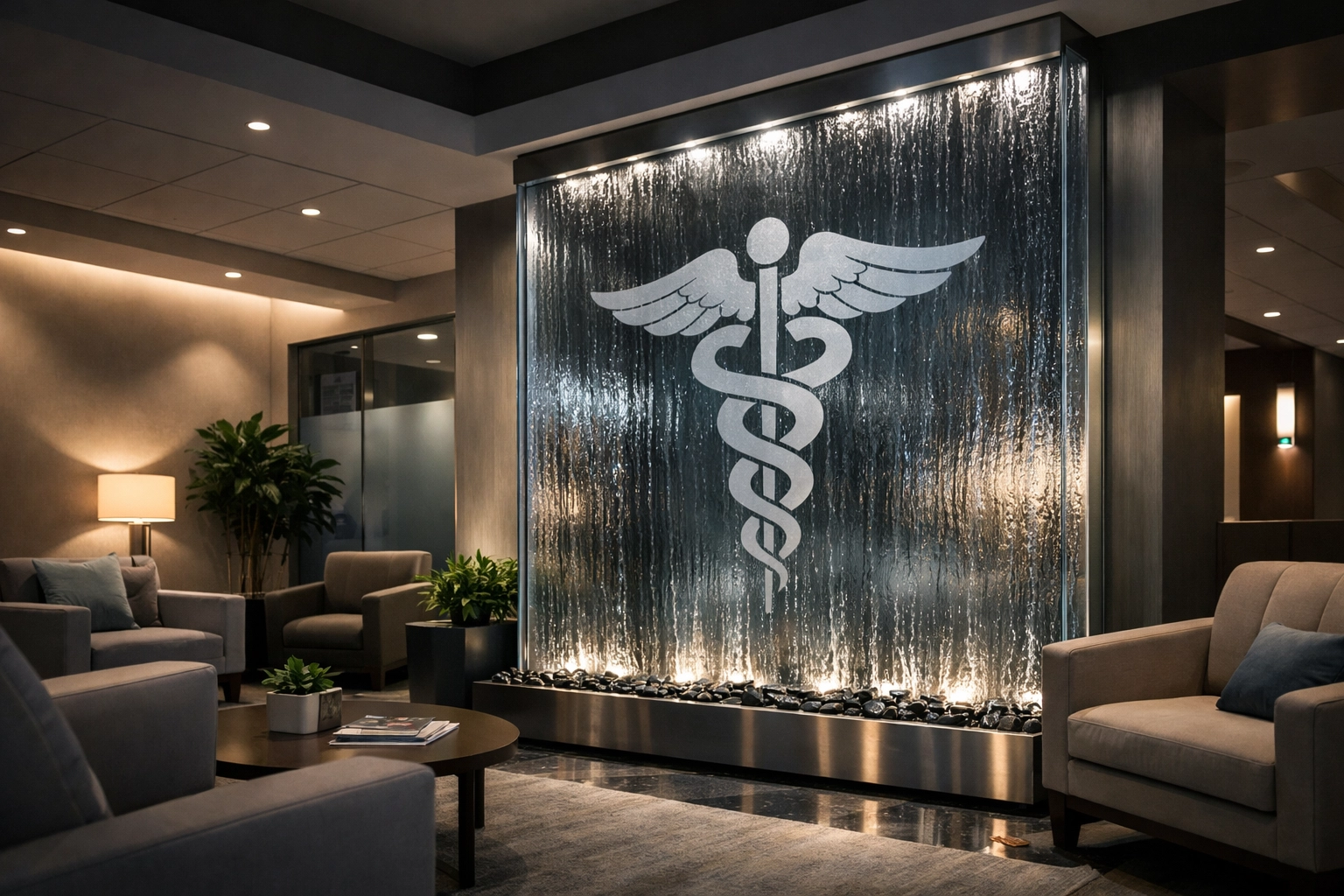
In 2017, a patient at a Wisconsin hospital died from Legionnaires' disease. The source? A decorative water feature in the facility's lobby, a design element meant to provide a calming, healing environment that instead became a breeding ground for deadly bacteria.
That tragedy wasn't an isolated incident. It was the inevitable result of a fundamental problem the design industry has been dancing around for decades: traditional water features in medical environments are biological liabilities waiting to happen.
For years, healthcare designers have faced an impossible choice: sacrifice patient safety for aesthetic benefit, or accept sterile, institutional spaces that do nothing to reduce stress or promote healing.
That choice just became obsolete.
The Hidden Danger in "Healing Environments"
The irony is painful. For years, research has proven that biophilic design, incorporating natural elements like water, plants, and natural light, reduces patient stress, lowers blood pressure, and even accelerates recovery times. Water features, in particular, provide powerful therapeutic benefits through visual calm and white noise masking.
But in medical settings, hospitals, surgical centers, dialysis clinics, dental practices, senior living facilities, traditional water features create the exact opposite of a healing environment. They create pathogen incubators.
Here's why:
Standing water + warmth + aerosolization = perfect bacterial breeding ground.
Traditional water features operate at room temperature (the ideal growth range for bacteria), provide constant moisture, and, through splashing, misting, or evaporation, send microscopic droplets into the air. Those droplets can carry Legionella pneumophila, Pseudomonas aeruginosa, and a host of other opportunistic pathogens that thrive in water systems.
For immunocompromised patients, the elderly, post-surgical patients, or anyone with respiratory conditions, inhaling these aerosolized bacteria isn't just a risk, it's a medical emergency waiting to happen.
The Wisconsin fatality wasn't a maintenance failure. It was a design failure. No amount of cleaning, chemical treatment, or monitoring can fully eliminate the biological risks of real water in sensitive medical environments.
That's why, for decades, infection control officers have had a standing policy: no water features. Period.
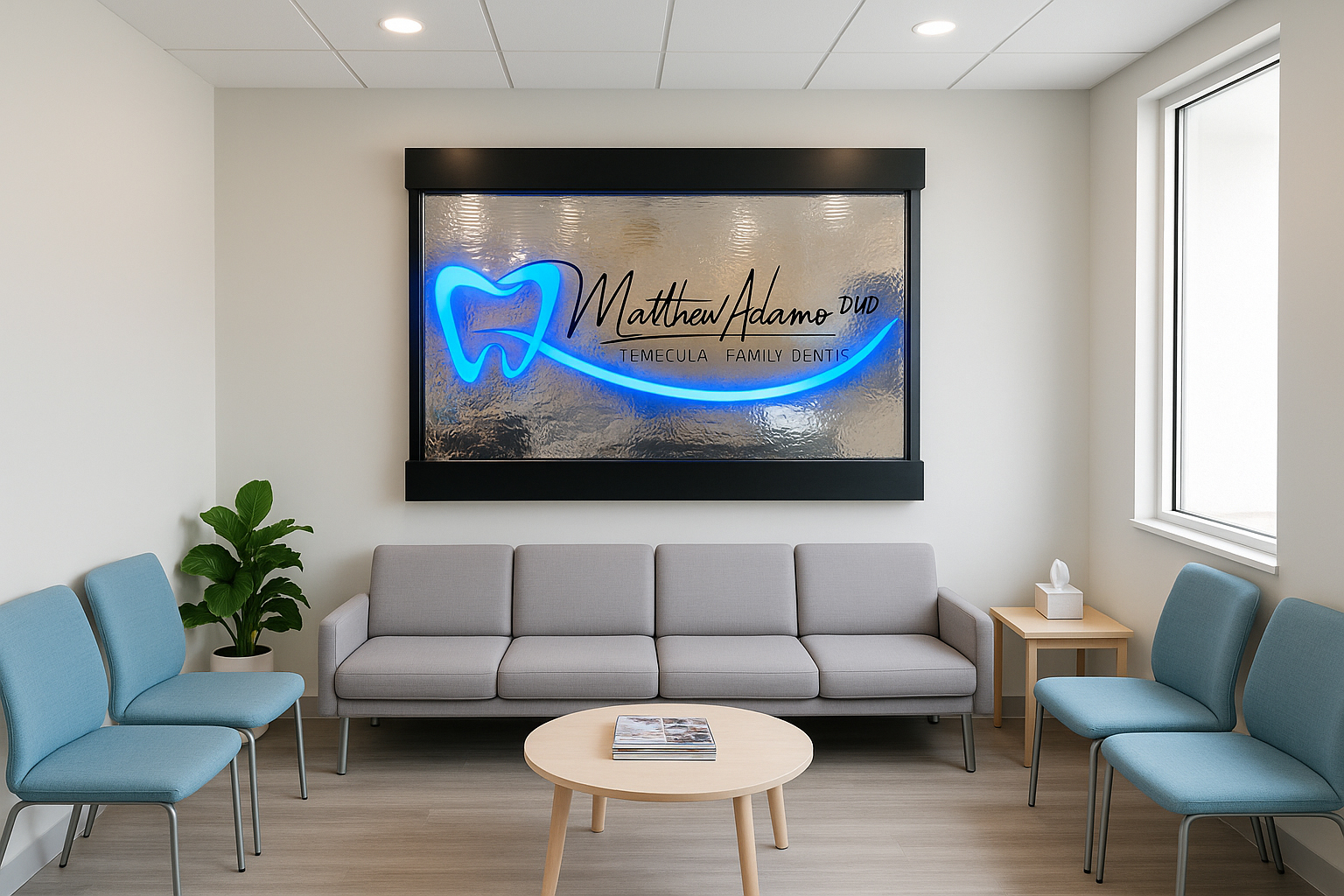
The Real Cost of "Playing It Safe"
So medical facilities did what they had to do. They removed water features. They banned fountains. They designed waiting rooms, lobbies, and patient areas as purely functional, sterile spaces.
And they paid a hidden cost.
Without calming design elements, patient anxiety increases. Stress levels spike in waiting rooms. The acoustic environment becomes harsher, every phone ring, every conversation, every footstep echoes off hard surfaces. Staff burnout accelerates in environments that feel institutional rather than human-centered.
Designers knew the research. They understood that a well-designed healing environment wasn't a "luxury", it was a measurable clinical benefit. But as long as water features meant infection risk, the conversation was over before it started.
Facilities directors would say: "I love the idea, but our infection control team will never approve it."
Architects would specify water features in early renderings, only to have them value-engineered out during the safety review.
Interior designers would propose biophilic elements, then watch them get vetoed by risk management.
The design community was stuck. Therapeutic environments and patient safety seemed fundamentally incompatible.
Enter L2O Liquid: The Engineered Solution
Here's where the story changes.
What if the problem wasn't "water features", but water itself?
That's the question that led to the development of L2O Liquid, a patented, chemically engineered fluid that looks, moves, and sounds like water, but is fundamentally different at the molecular level.
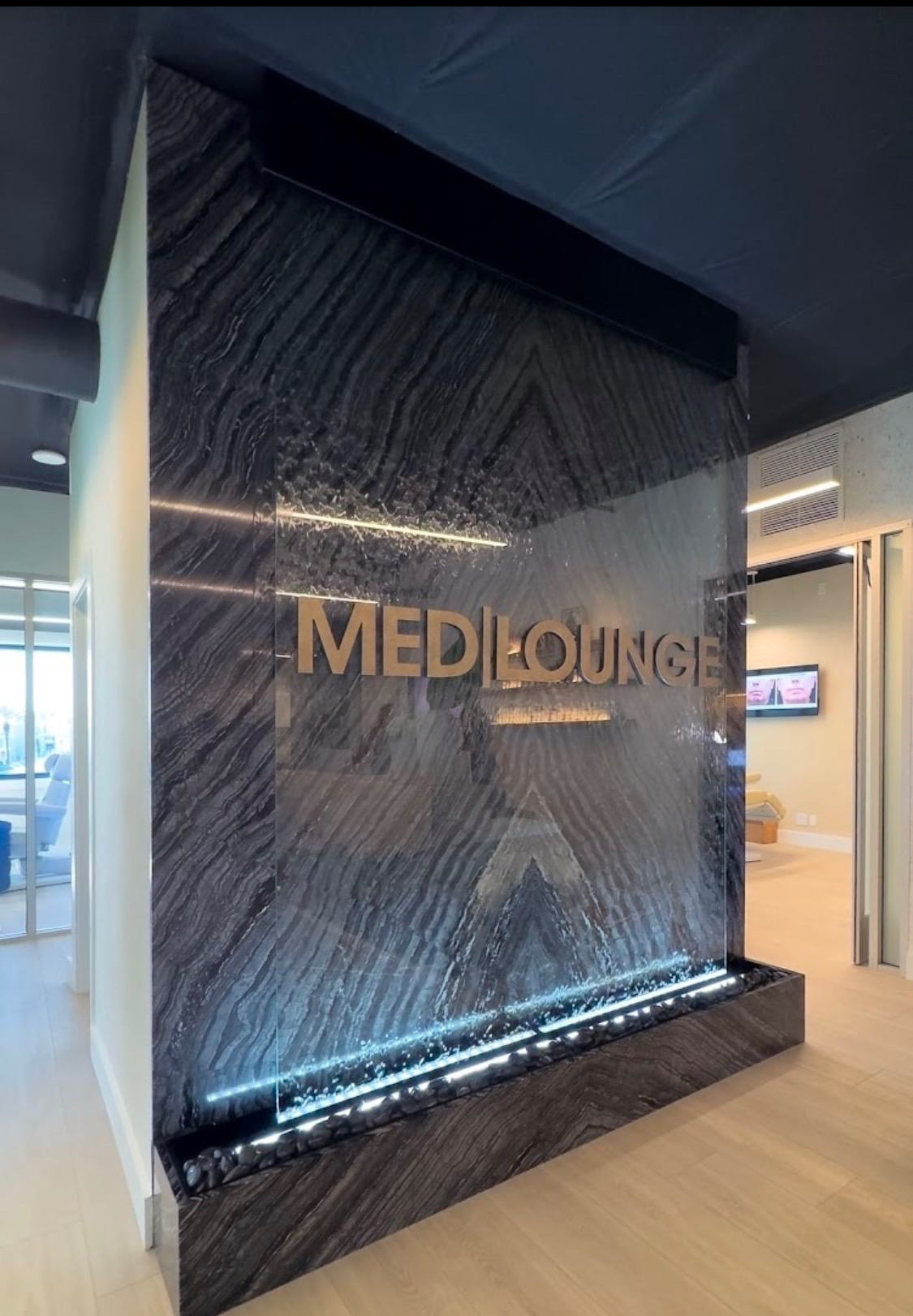
L2O Liquid is not "treated water" or "purified water." It's a bio-inert medium specifically designed so that bacteria, algae, mold, and viruses cannot survive in it. Period.
Here's the technical breakthrough:
Traditional water provides everything microorganisms need to thrive: hydrogen, oxygen, minerals, and a neutral pH. It's literally a nutrient soup. Add warmth and movement, and you've got an ideal microbial ecosystem.
L2O Liquid is chemically formulated to be a biological dead zone. Pathogens can't metabolize it. They can't reproduce in it. They can't colonize surfaces that contact it. It's not antibacterial in the traditional sense, it's simply uninhabitable at the cellular level.
And because L2O Liquid doesn't evaporate the way water does, there's zero aerosolization risk. No mist. No airborne droplets. No pathways for bacteria to enter the respiratory system.
For the first time in the history of interior design, you can have a flowing, cascading, visually stunning water feature in a medical environment with zero biological risk.
What This Means for Medical Designers and Administrators
Let's be clear about what just changed:
You no longer have to choose between a calming, biophilic patient environment and infection control compliance.
For designers, this opens up an entirely new design vocabulary. You can now specify statement water features in:
Hospital lobbies and main entrances
Surgical center waiting areas
Dental and orthodontic practices
Dialysis and infusion centers
Senior living and memory care facilities
Behavioral health and wellness centers
Urgent care and outpatient clinics
For administrators and facilities directors, this eliminates a major liability category. There's no ongoing chemical treatment, no maintenance schedule, no quarterly water testing, no risk of non-compliance during inspections, and, most critically, no risk of a pathogen-related incident tied back to a decorative feature.
For infection control officers, this is the answer they've been waiting for. L2O Liquid-based features don't just meet safety standards, they eliminate the entire category of risk.
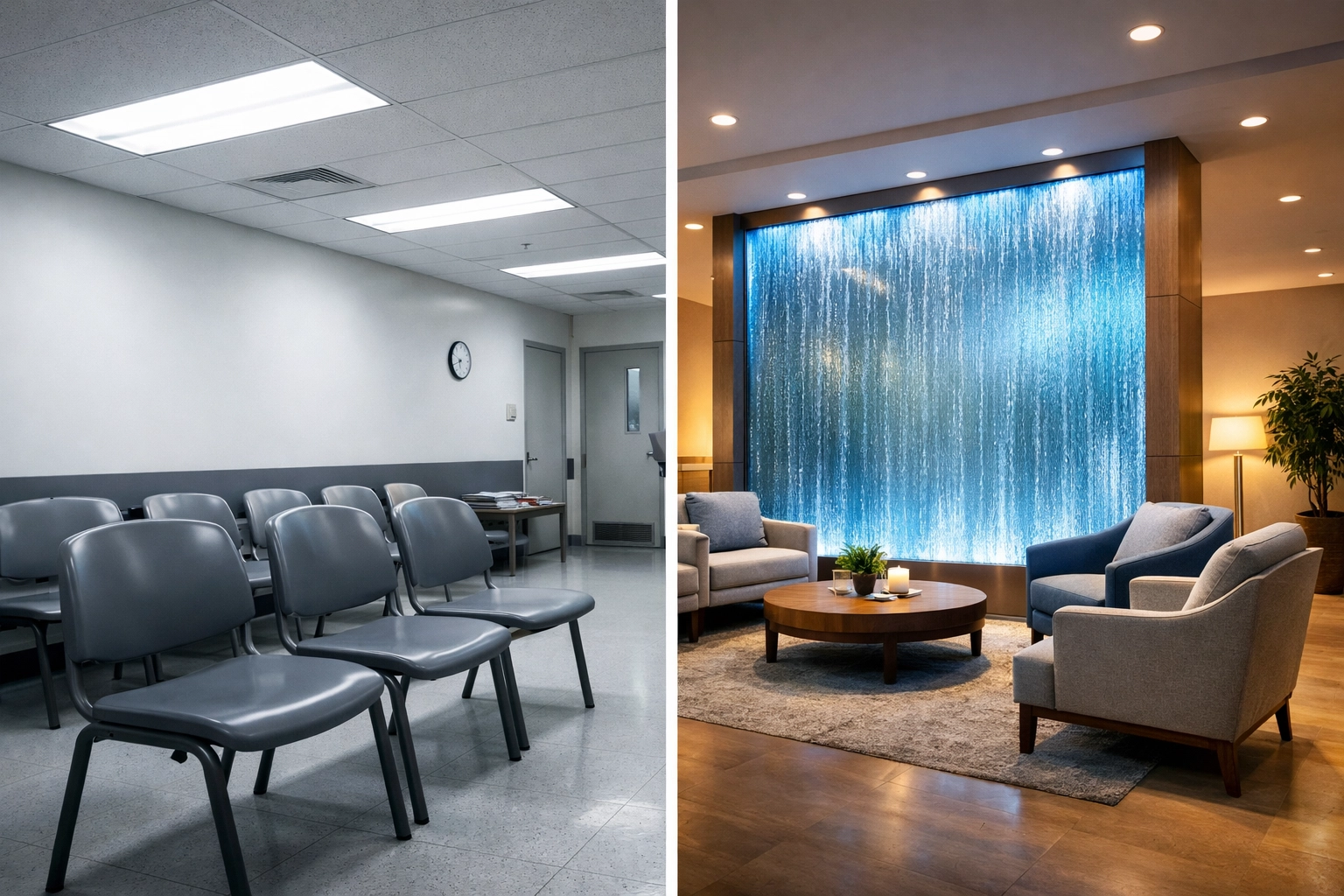
The New Standard for Sensitive Environments
Since the introduction of L2O Liquid technology, we've seen a fundamental shift in how medical and sensitive environments approach interior design.
Facilities that previously wouldn't even entertain the idea of a water feature are now incorporating custom Liquidwalls as signature design elements. We've installed bio-safe features in hospitals, dental practices, surgery centers, and senior living communities, environments where traditional water features would have been immediately rejected by risk management.
The feedback has been consistent: patients feel calmer, staff appreciate the acoustic masking, and administrators sleep better knowing there's zero infection risk.
One hospital administrator told us: "For twenty years, I've been saying 'no' to water features. Now I'm the one asking our design team why we don't have more of them."
Beyond Aesthetics: A Clinical Design Tool
Here's what the research shows about biophilic design in medical environments:
Patients with views of nature (including water features) require less pain medication and recover faster post-surgery
Ambient water sounds mask clinical noise and reduce patient anxiety by up to 30%
Waiting room stress decreases measurably in spaces with natural elements
Staff satisfaction and retention improve in environments that feel less institutional
These aren't "soft" benefits. They're measurable clinical outcomes.
For decades, medical designers have known this: but couldn't act on it because the safety risk outweighed the therapeutic benefit.
L2O Liquid flips that equation. Now, the therapeutic benefit comes with zero safety risk.
That changes everything.
Rewriting the Design Standards
The Wisconsin tragedy should have been a wake-up call: not just about better maintenance, but about fundamentally rethinking how we use water in sensitive environments.
L2O Liquid is that rethinking.
It's not a "safer water feature." It's a different category entirely: one that gives designers, architects, and healthcare administrators the freedom to create genuinely healing environments without compromising patient safety.
If you're designing for a medical facility, senior living community, or any environment where infection control is non-negotiable, the old rules no longer apply.
You don't have to sacrifice beauty for safety. You don't have to accept sterile, institutional environments as the only "responsible" choice.
You can have both: and it starts with understanding what L2O Liquid makes possible.
Ready to explore bio-safe water features for your medical facility?View our healthcare portfolio or reach out to discuss how Liquidwall technology can transform your space( without the liability.)
Comments