
Are Traditional Water Features Dead? Do People Still Use Real Water?

Walk into any corporate lobby, medical facility, or upscale retail space today, and you'll likely spot a water feature. But here's what might surprise you: many of these stunning installations aren't using traditional water at all. So are traditional water features dead? The answer is more nuanced than you might think.
Traditional water features aren't dead, but they're definitely on life support. While demand for indoor water features has never been higher, the problems with conventional water-based systems have become impossible to ignore. Smart designers and facility managers are increasingly turning to maintenance-free alternatives that deliver all the visual impact without the headaches.
The Dirty Truth About "Clean" Water Features
Let's be honest about what traditional indoor water features really look like after a few months of operation. That crystal-clear cascade you admired during installation? It's now cloudy, stained, and possibly growing things that definitely weren't part of the original design.
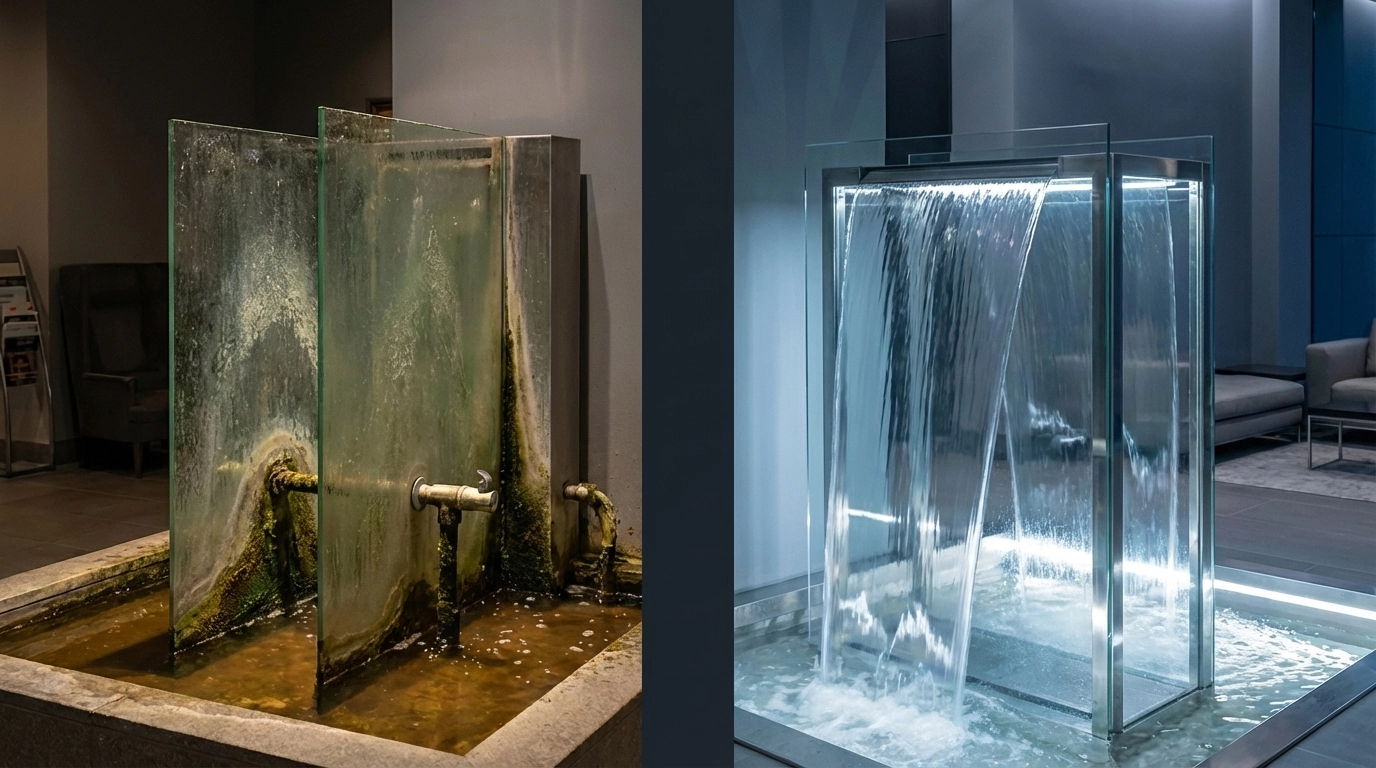
Traditional water features come with a laundry list of problems:
Constant scaling and mineral buildup that clouds the glass and creates unsightly white deposits
Algae growth that turns your elegant feature green and slimy
Bacterial contamination that poses real health risks in indoor environments
Pump failures and mechanical breakdowns that leave you with a silent, stagnant eyesore
Chemical treatments that require ongoing monitoring and professional maintenance
Water quality issues that demand filtration systems, UV sterilizers, and regular testing
The maintenance burden is staggering. Traditional water features require weekly cleaning, monthly deep sanitization, quarterly professional servicing, and annual equipment replacement. That beautiful waterwall you installed? It's basically a part-time job disguised as décor.
Enter the Game-Changer: L2O Technology
This is where LL Waterfall Design's revolutionary approach changes everything. L2O Liquid isn't treated water, it's a complete water replacement. Think of it as the Tesla of water feature technology: it looks like traditional water, flows like traditional water, but performs infinitely better.
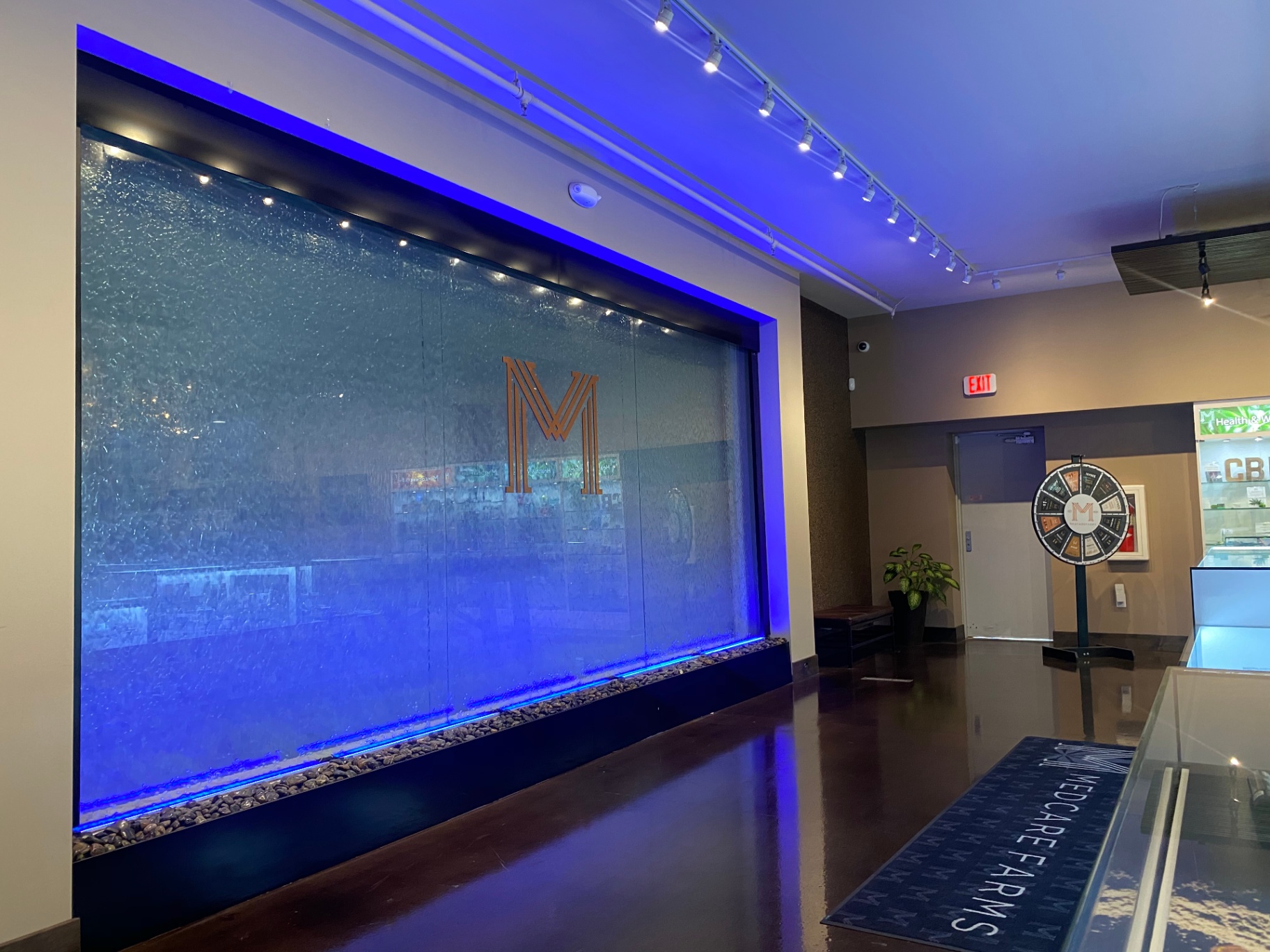
L2O Liquid delivers everything traditional water promises, minus the problems:
Crystal clear performance that never clouds or scales
Zero algae growth because algae simply can't survive in L2O
Completely hygienic with no bacterial contamination risks
Maintenance-free operation that eliminates ongoing service costs
Consistent visual appeal that looks the same on day 1000 as day 1
The difference is immediately visible. Where traditional water features develop that telltale cloudy, mineral-stained appearance, L2O installations maintain their pristine clarity indefinitely.
Why Smart Facilities Are Making the Switch
The economics alone make a compelling case. Traditional water features cost thousands annually in maintenance, chemical treatments, and professional servicing. They also carry liability risks, bacterial growth in indoor water features has been linked to respiratory issues and other health concerns.
L2O systems eliminate these costs entirely. No weekly cleanings. No chemical balancing. No pump repairs or filter replacements. The feature simply runs, looking perfect, year after year.
But the real game-changer is reliability. Traditional water features are notorious for breaking down at the worst possible moments, usually right before important client meetings or during high-traffic periods. L2O systems are engineered for continuous operation without the mechanical complexity that causes traditional features to fail.
Real-World Performance in Demanding Environments
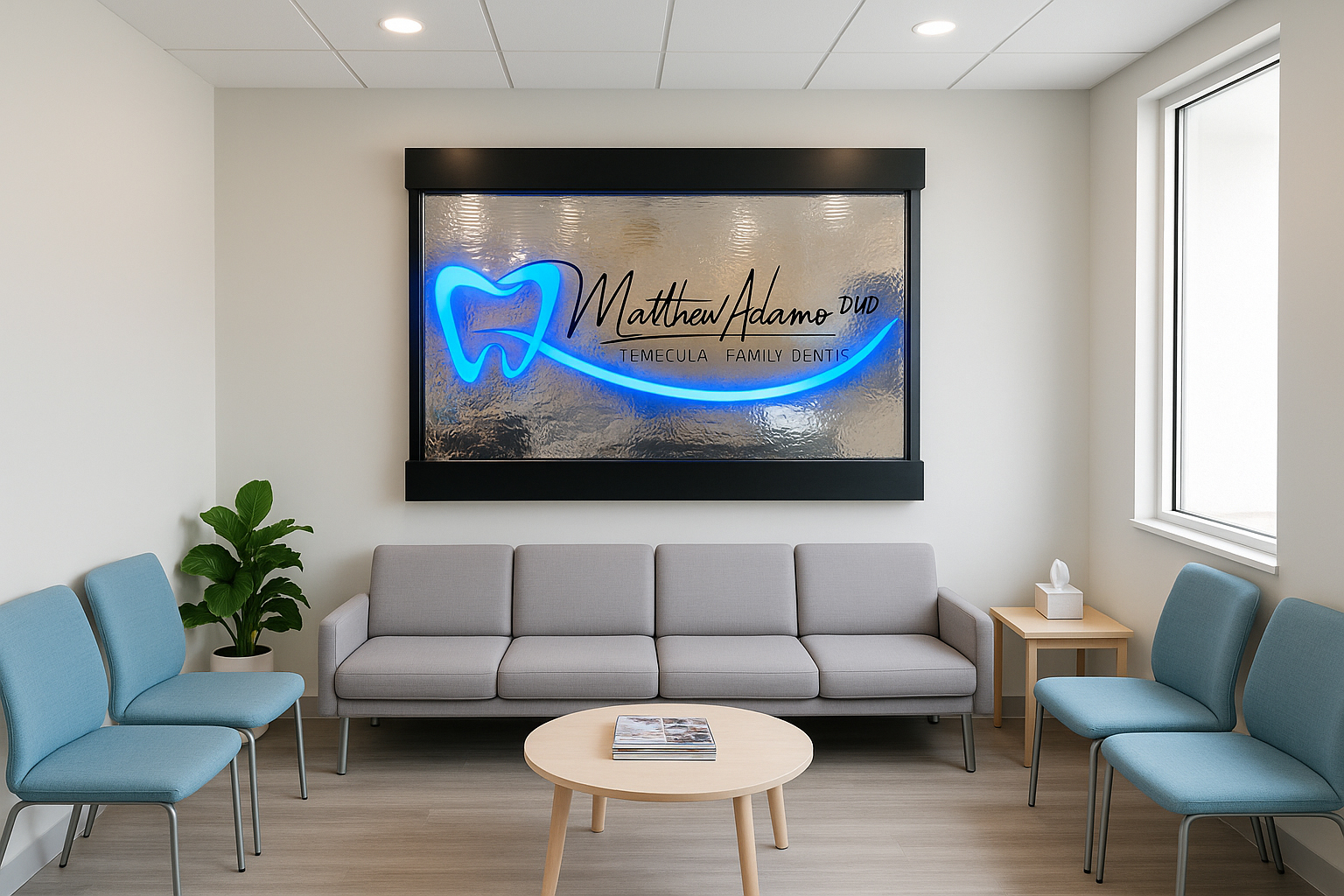
Consider healthcare facilities, where water quality isn't just an aesthetic concern, it's a patient safety issue. Traditional water features are increasingly banned from medical environments due to contamination risks. L2O technology opens up these markets again, allowing healthcare designers to incorporate biophilic elements safely.
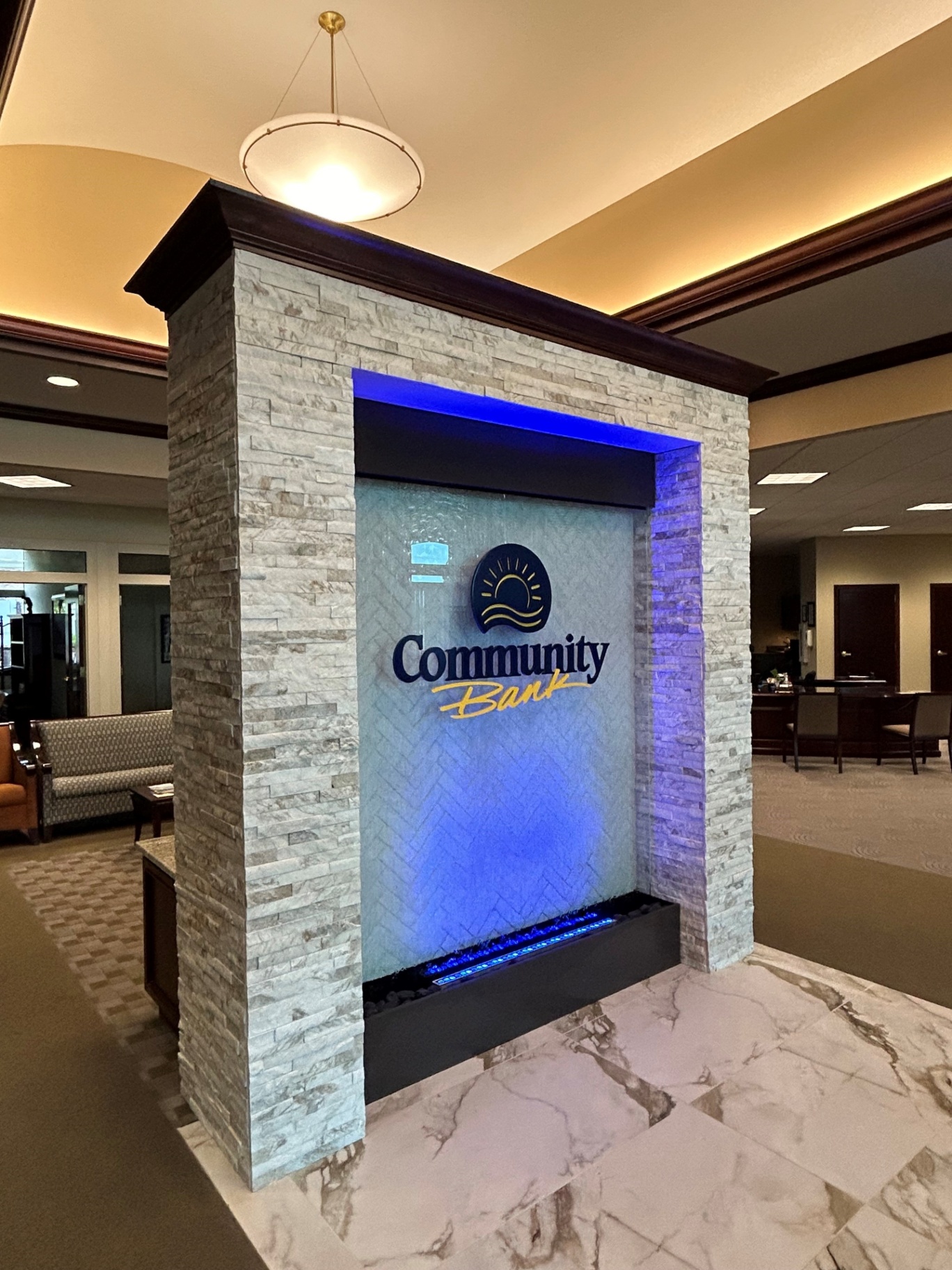
The same principle applies across sensitive environments:
Corporate lobbies where downtime creates embarrassing first impressions
Retail spaces where maintenance disruptions hurt business
Educational facilities where budget constraints make ongoing costs prohibitive
Luxury venues where any decline in appearance damages the brand
The Future is Maintenance-Free
Here's what's really happening in the water feature industry: demand is exploding, but tolerance for maintenance is disappearing. Modern facility managers want the psychological and aesthetic benefits of water features without the operational burden.
This shift mirrors broader trends across commercial design. Think about how LED lighting replaced traditional bulbs not just for energy efficiency, but because they eliminated the constant maintenance of bulb replacement. L2O technology represents the same evolutionary leap for water features.
The numbers tell the story:
90% reduction in ongoing maintenance costs
Zero downtime for cleaning or repairs
Indefinite lifespan with proper installation
Immediate return on investment through eliminated service contracts
Beyond Traditional Thinking
The question isn't really whether traditional water features are dead, it's whether clinging to outdated technology makes sense when superior alternatives exist. L2O represents the maturation of water feature technology. It's what happens when you engineer solutions for real-world performance rather than just initial impact.
Smart designers are already making this transition. They're specifying maintenance-free systems not as compromises, but as upgrades. The visual results are identical or superior, the operational benefits are dramatic, and the long-term value proposition is undeniable.
Making the Smart Choice
So do people still use real water in indoor features? Yes, but increasingly they're questioning why they should. When you can achieve superior results with zero maintenance using L2O technology, traditional water becomes the expensive, high-maintenance option.
The water feature industry is at an inflection point. Traditional systems will persist in some applications, but the momentum is clearly toward maintenance-free alternatives. Forward-thinking designers and facility managers are already making the switch, enjoying the benefits of perfect water features that actually stay perfect.
The question for your next project isn't whether water features are worth it: they absolutely are. The question is whether you'll choose the high-maintenance traditional approach or the intelligent, maintenance-free future.
Learn more about LL Waterfall Design's maintenance-free solutions and discover why leading designers are choosing L2O technology for their most demanding projects.
Comments